
Roof and Exterior Leak Detection in Downers Grove
Roof and exterior leak detection Downers Grove IL homeowners rely on us for starts at the stain and works back to the real entry point. We track ceiling and wall leaks to the roof, window, siding or plumbing that causes them, using thermal imaging, moisture meters and controlled water tests. Visits start at $250, and you get a free quote first. Call or text us at (630) 780-4025.
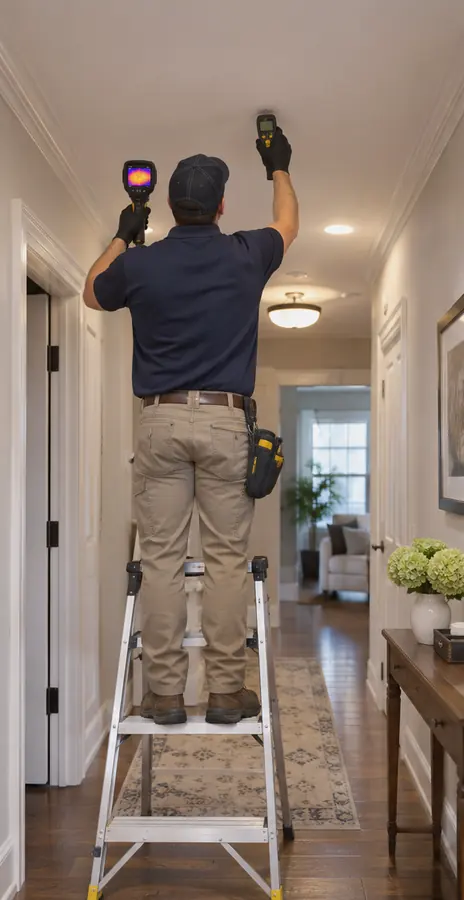
Stains Under the Roof After Rain
Roof and exterior leak detection in Downers Grove IL is the service we perform when water is getting into your home from outside and you cannot tell where. A brown ring on a ceiling, a damp attic, paint that bubbles on an upper wall, a window that drips in a storm or a siding board that feels soft can each have a different cause. The place the water shows is rarely the place it enters. Water runs along rafters, sheathing and framing before it drops. Our technicians use thermal imaging, moisture meters and controlled water tests to follow the water back to its entry point, and we mark it so your roofer or contractor fixes the right spot.
We built this service for homeowners who have already had a patch that did not hold. Our team has been tracking exterior water entry in Downers Grove for more than 10 years. When you call, we ask where the stain is, when it appears and how old the roof is. That already narrows the list.
Our Roof and Exterior Leak Detection Services
Everything below is included in the visit price.
Thermal Imaging of Ceilings and Walls
A thermal camera shows wet areas as cool patches, even before a stain appears.
Moisture Meter Mapping
We scan ceilings, walls and attic framing and mark each reading.
Attic Inspection
We trace water along rafters and sheathing to find where the staining starts.
Controlled Water Tests
We apply water to one area at a time, starting low and working up, while a second person watches inside. This pins the entry point.
Exterior Walkaround
We inspect flashing, vents, valleys, windows, doors, siding and gutters from the ground and, where safe, from a ladder.
Written Findings With Photos
You receive photos, readings and the entry point, with repair options and prices.
Signs Water Is Getting In From Outside
| What you notice | What it often means | What we check first |
|---|---|---|
| Brown ring on a ceiling after rain | Roof leak or attic condensation | Attic and roof penetrations |
| Bubbling paint on an upper wall | Water behind siding or around a window | Siding, flashing and window |
| Damp wall near a chimney | Chimney flashing or crown | Chimney and roof junction |
| Water at window corners | Frame or sealant failure | Window and flashing |
| Soft siding boards | Moisture behind cladding | Siding and moisture map |
| Stains that appear only in wind driven rain | Gaps in siding, trim or vents | Exterior joints and vents |
Exterior Entry Points for Water
Flashing at Penetrations
- What you notice: Stains near a vent, chimney or skylight.
- Why it happens: Sealant dries out and metal lifts.
Valleys and Transitions
- What you notice: Stains where two roof planes meet.
- Why it happens: Heavy runoff overloads the joint.
Shingle Damage
- What you notice: Missing, curled or cracked shingles.
- Why it happens: Age, wind and hail.
Window and Door Openings
- What you notice: Water at corners and sills.
- Why it happens: Sealant fails and flashing is missing or lifted.
Siding and Trim Gaps
- What you notice: Damp walls and peeling paint.
- Why it happens: Joints open and caulk cracks.
Gutters and Downspouts
- What you notice: Overflow at the eaves and wet walls below.
- Why it happens: Clogs and loose joints send water behind fascia.
Storms and Aging Exteriors Here
Most roof leaks start at penetrations and transitions such as flashing, vents and valleys, and that matches what we see in Downers Grove. Freeze and thaw cycles open small gaps in flashing and sealant every winter, so a roof that held last year may leak this year. The July 4, 2026 storm and the August 12, 2025 flash flood both tested local roofs, windows and drainage with heavy rain, and leaks often show up in the days that follow.
Public census based data puts the median Downers Grove home at 1974, and about 64 percent of homes date from 1979 or earlier. Roofs and exteriors on many of those homes have been replaced once or twice, and the seams where old and new meet are common weak spots.
Following Rain Water Back to the Entry Point
Our visit follows four steps.
- You call or text us: Tell us where the stain is and when it appears. We ask the age of the roof and any past repairs.
- We pick a window with you: We offer the earliest slot and prefer a day that follows rain or a dry day when we can run a water test.
- We trace the entry: We scan inside, inspect the attic and run controlled water tests outside.
- We send your report: You receive photos, readings and the entry point, with repair options and prices.
- We rank the findings: If more than one weak spot exists, we say which is the likely cause of your leak.
- We stay available for your roofer: If your roofer has questions, call us.
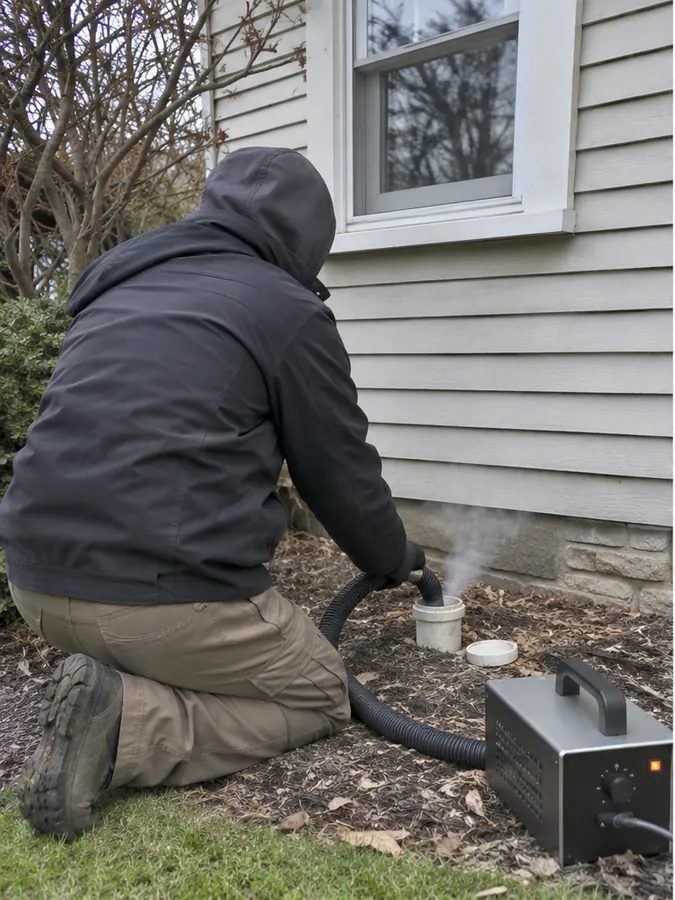 Before
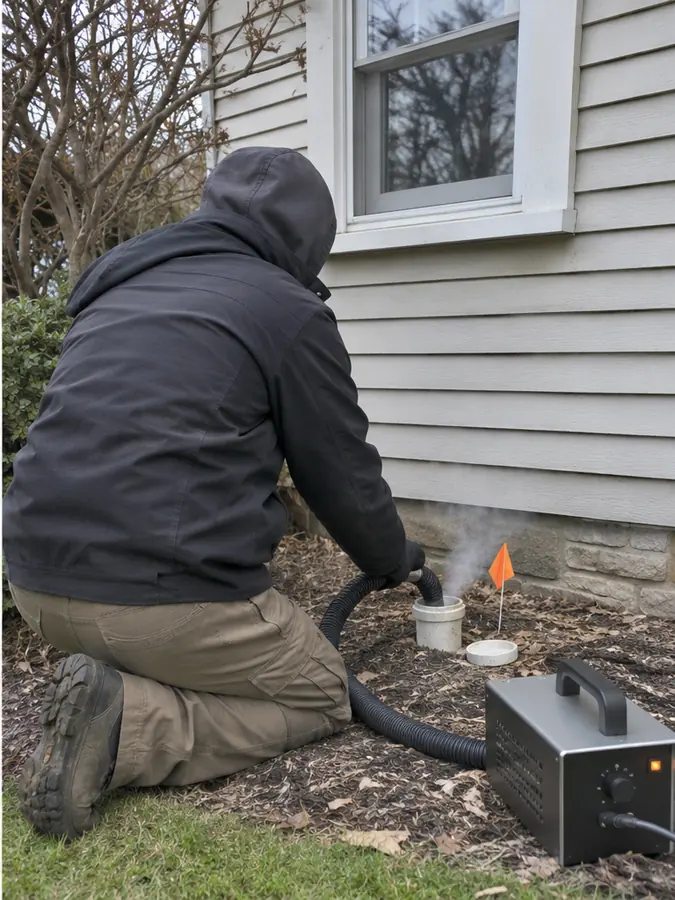 After
Verified Non-Invasive Leak Pinpointing (Roof and Exterior Leak Detection)
Every roof and exterior leak detection visit includes surface marking and a dated written report with photos or video before any repair begins.
Roof, Window or Plumbing?
Not every ceiling stain is a roof leak. Plumbing lines, ductwork condensation and bath fans can all stain a ceiling. We check them together.
A Roof Leak
Roof leaks follow rain, and the stain usually grows after storms. We find them with thermal imaging and water tests.
A Window or Siding Leak
These show up on walls and around openings, often after wind driven rain. We find them with spray tests and moisture mapping.
A Plumbing Leak
Plumbing leaks follow water use, not weather. We rule them in or out with a meter test and a check of the lines above the stain.
Condensation
Attic and duct condensation causes staining in cold weather. We check ventilation and insulation.
Roof and Exterior Leak Detection Work We Have Finished
Here is what neighbors told us after we found the entry point of their leaks.
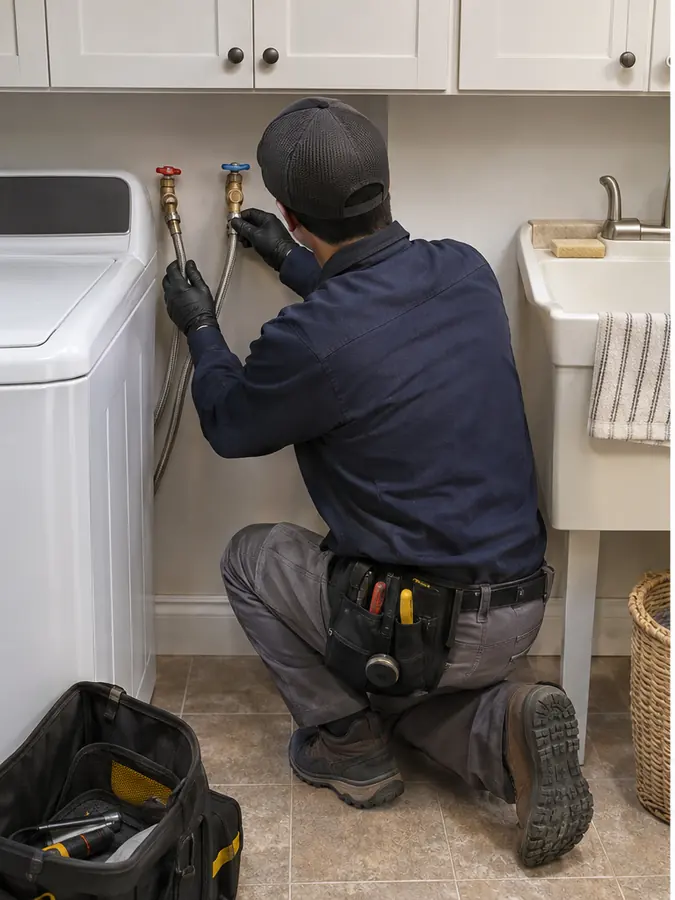 Before
 After
Verified Non-Invasive Leak Pinpointing (Roof and Exterior Leak Detection)
Every roof and exterior leak detection visit includes surface marking and a dated written report with photos or video before any repair begins.
Exterior Tools and Written Findings
- Thermal camera: Shows hidden wet areas.
- Moisture meters: Read drywall, wood and masonry.
- Water test kit: Hoses and nozzles for controlled spray tests.
- Ladders and safety gear: For safe access.
- Photos and notes: A record of each test.
- Written report: The entry point, the evidence and the options.
Roof and Exterior Leak Detection Cost Here
Roof and exterior leak detection costs $250 to $550 in Downers Grove. We give you the exact price before we start, and our visits begin at $250.
| Situation | Our price |
|---|---|
| One stain, one entry point | $250 to $350 |
| Several stains or an attic scan | $350 to $450 |
| Whole exterior or complex roofs | $450 to $550 |
- Roof pitch and height: Steeper roofs take more time.
- Number of stains: Each adds a test.
- Weather: Wet or icy conditions may require a return visit.
A visit costs far less than a patch that misses the entry point.
Why Homeowners Choose Our Team for Exterior Leaks
What to Do While You Wait
- Place a bucket and move belongings.
- Poke a small hole in a bulging ceiling: It releases trapped water, but only if it is safe.
- Photograph the stain and mark its edge with a pencil.
- Note when it appears: After rain, wind or snow melt.
- Do not climb onto a wet roof.
What to Expect on the Day
Our technician arrives with the thermal camera, meters and test gear. We scan inside, then go to the attic and the exterior. If a water test is needed, we run it in stages. Most visits take two to three hours. We explain the findings and the options.
How We Run a Controlled Water Test
A water test sounds simple, but the order matters. If you spray the whole roof at once, you learn only that water gets in somewhere. We work in stages, so each result narrows the answer.
- Start low: We begin below the suspected entry and work upward, a few feet at a time.
- Wet one zone at a time: Each zone gets several minutes of steady flow, long enough for water to travel.
- Watch from inside: A second person watches the ceiling, attic or wall with a flashlight and a meter.
- Record the time: The delay between water and a drip tells us how far the water traveled.
- Stop when it shows: The zone where the leak first appears is the entry area.
- Confirm by retesting: We repeat that zone to be sure.
A test like this takes patience, and it works best on a day without rain. It does not damage a sound roof, and it tells us what no thermal photo can: where the water actually gets in.
What We Find Most Often by Roof Type
Asphalt Shingle Roofs
- Common entry points: Flashing at chimneys and walls, plumbing vent boots and valleys.
- What we watch for: Cracked boots, lifted shingles and exposed nails.
Flat or Low Slope Roofs
- Common entry points: Seams, drains and parapet edges.
- What we watch for: Ponding water and failed membranes.
Metal Roofs
- Common entry points: Fasteners, seams and penetrations.
- What we watch for: Backed out screws and failed sealant.
Tile and Slate Roofs
- Common entry points: Broken tiles and flashing.
- What we watch for: Slipped pieces and corroded flashing.
Ice, Snow and Winter Leaks
Winter brings its own leak pattern. Ice dams form when heat escapes into the attic, melts snow and sends water to the cold eaves, where it refreezes. The ice backs water up under shingles and into the house. Freeze and thaw cycles also open small gaps in flashing and sealant, so a leak may show up during a thaw.
If you see icicles hanging along the eaves or water stains at exterior walls near the roofline, tell us. We check attic insulation and ventilation along with the roof itself, because the cause may be heat loss rather than a broken shingle. The right fix then is insulation and air sealing, not a patch.
Quick Checks Before We Arrive
- Look at the attic floor and rafters: Dark stains or damp insulation show where water travels.
- Check the ceiling stain size over time: Mark the edge with a pencil and date it.
- Look outside for missing or lifted shingles: From the ground, with binoculars if you have them.
- Check gutters and downspouts: Overflow can send water behind the fascia.
- Note the weather when the leak appears: Wind driven rain points to siding or windows.
Insurance and Documentation
A roof or exterior leak often leads to an insurance question. Adjusters like facts: when the leak began, what caused it, where the water entered and how far it spread. Our report records the entry point, the moisture readings and photos with dates. If a storm caused the damage, we note the storm date when you tell us. We do not give coverage advice, and your adjuster is the right person to ask about your policy, but a clear report helps any claim move faster.
If you are buying or selling a home with a past leak, our findings also help. A buyer wants to know whether a stain is old and dry or active. A moisture reading answers that question in a way a photo cannot.
Repair Next Steps
After we find the entry point, you decide who fixes it. We tell you which trade fits.
Roofer
- Best for: Flashing, shingles, vents and valleys.
- What to share: Our photos and the marked entry point.
Window or Siding Contractor
- Best for: Openings, cladding and trim.
- What to share: The spray test results.
Plumber
- Best for: Supply or drain leaks that mimic a roof leak.
- What to share: The meter test and the stain location.
Insulation or Ventilation Contractor
- Best for: Ice dams and attic condensation.
- What to share: Our attic findings.
Exterior Leak Visits Across the Area
We trace exterior leaks across Downers Grove, from older ranches and split levels to newer homes. Older homes often show flashing and sealant failures. Newer homes sometimes show construction gaps at windows and transitions. Wherever you live, the process is the same: we scan, we test and we report.
Waiting on a Roof Leak Costs More
Water in a roof does not stay put. It soaks insulation, rots sheathing, stains ceilings and feeds mold. A small leak becomes a big repair. A visit from us starts at $250, and it usually saves more than that by pointing the patch at the actual entry point. Call us at (630) 780-4025 and we will tell you what to expect.
Common Questions on Roof and Exterior Leak Detection
We use thermal imaging, moisture meters and controlled water tests.
Most visits cost $250 to $550.
We find the entry point and tell you what to ask a roofer.
Yes. We use controlled water tests.
No. Our methods are non destructive.
We rule plumbing in or out with the meter test.
Related Leak Detection Services & Local Coverage for Roof and Exterior Leak Detection
Explore related non-invasive leak detection services and nearby DuPage County service areas:
Reviewed by Leak Detection Downers Grove Field Specialists (10+ Years DuPage County Experience) — Non-invasive acoustic listening, thermal imaging, moisture mapping, tracer gas, and sewer camera procedures verified for Downers Grove and DuPage County homes and businesses. Learn more about our leak detection team or request a free quote.
Service Dispatch Map: Roof and Exterior Leak Detection
Dispatched from 5050 Thatcher Rd, Downers Grove, IL 60515 across Downers Grove and DuPage County, IL. Call or text (630) 780-4025 for your quote.