
Fixture and Appliance Leak Detection in Downers Grove
Fixture and appliance leak detection Downers Grove IL homeowners call us for starts with a simple question: which fixture is actually leaking? We track the loss to the toilet, shower, sink, water heater or appliance behind it, test it and show you the proof. Visits start at $150, and you get a free quote first. Call or text us at (630) 780-4025.
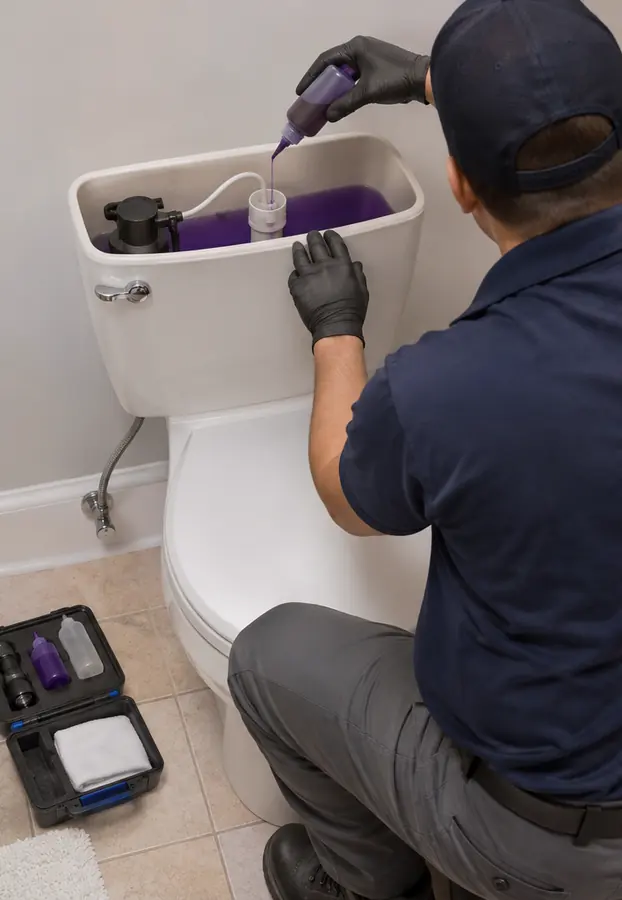
Small Drips, Big Waste
Fixture and appliance leak detection in Downers Grove IL is the service we perform when water is going somewhere inside your home and you cannot tell where. A slow toilet leak, a weeping valve under a sink, a worn washing machine hose or a corroded water heater fitting can each push your bill up without any obvious puddle. Our technicians test each fixture with dye tablets, moisture meters, pressure checks and a visual inspection of every connection. We name the leaking fixture, show you the evidence and tell you what a fix costs.
The EPA WaterSense program notes that household leaks waste nearly 10,000 gallons of water a year, and a leaking toilet can waste hundreds of gallons a day when the flapper fails. The Village bills about 17,200 accounts every two months, so a silent fixture leak can run for a full billing cycle before you see the number. Our team has been tracking down fixture leaks in Downers Grove homes for more than 10 years.
When you call, we ask what you have seen: a bill spike, a stain, a sound or a smell. Then we offer the earliest visit we have.
Our Fixture and Appliance Leak Detection Services
Everything below is included in the visit price. We bring the gear, run the tests and leave you with a written report.
Toilet Dye and Flapper Tests
We drop a dye tablet in the tank and wait. Color in the bowl without a flush proves a flapper or fill valve leak.
Shower and Tub Flood Tests
We plug the drain and fill the pan or tub, then watch the level and the ceiling below. This separates a drain leak from a valve or tile leak.
Sink and Faucet Connection Checks
We inspect supply lines, shutoff valves, traps and faucet bases with a moisture meter and a dry paper test.
Water Heater Inspection
We check the tank, the relief valve, the fittings and the drain pan for moisture and corrosion.
Appliance Line Checks
We look at washer hoses, dishwasher lines, refrigerator ice maker lines and softener connections.
Meter and Pressure Check
We read the meter with everything off, then isolate lines to confirm which section is losing water.
Written Report With Photos
You receive photos, readings and repair options, with prices.
Telling Which Fixture Is Leaking
Many leaks give clues. This table shows what we look for.
| What you notice | Likely source | Our first test |
|---|---|---|
| Toilet runs or refills on its own | Flapper or fill valve | Dye tablet in the tank |
| Water at the toilet base | Wax ring or supply line | Moisture meter and dry paper |
| Ceiling stain under a bathroom | Shower pan, tub drain or valve | Flood test |
| Cabinet floor soft under a sink | Supply line, trap or faucet | Connection check |
| Puddle near the water heater | Tank, fitting or relief valve | Moisture mapping |
| Wet floor near the washer or dishwasher | Hose, valve or drain line | Line check |
| Meter moves with all fixtures off | Hidden leak somewhere | Meter and isolation test |
Fixture Leaks by Source
Here is what we find most often, and why it happens.
Toilet Flapper and Fill Valve
- What you notice: Occasional refill sounds or a faint trickle.
- Why it happens: Rubber hardens and mineral deposits stop the seal.
Wax Ring at the Toilet Base
- What you notice: Moisture around the bowl and a spongy floor.
- Why it happens: The seal wears or the toilet rocks.
Shower Valve and Pan
- What you notice: A stain on the ceiling below or loose tile.
- Why it happens: Seals fail and liners crack.
Under Sink Connections
- What you notice: A damp cabinet and a musty smell.
- Why it happens: Nuts loosen and washers wear.
Water Heater Fittings
- What you notice: Drips on the pan or a rusty base.
- Why it happens: Fittings corrode and the tank ages.
Appliance Hoses
- What you notice: Damp floor near the machine.
- Why it happens: Rubber hoses crack and fittings loosen.
Aging Fixtures in Older Homes
Public census based data puts the median Downers Grove home at 1974, and about 64 percent of homes date from 1979 or earlier. In homes of that age, we often find original shutoff valves, galvanized supply lines and older shower valves. These parts were built for decades of use, and many have now passed that point. Rubber and plastic parts are the most likely to fail first. If your toilet, faucet or heater is more than 10 to 15 years old, a check can save you from a surprise leak.
Copper supply lines are commonly put at 50 plus years, and galvanized steel at 40 to 60 years, so the visible lines under sinks are often fine while the fixtures themselves are what leak. We tell you which parts are worn and which are not.
Checking Every Fixture Methodically
Our visit follows four steps.
- You call or text us: Tell us what you have noticed and where. We ask the age of your home and your fixtures.
- We pick a window with you: We confirm the address and the earliest slot.
- We test each fixture: We start with the meter, then work through toilets, showers, sinks, heaters and appliances one by one.
- We send your report: You receive photos, results and repair options with prices.
- We mark what to fix first: The most wasteful leaks come first.
- We stay available for your plumber: If your plumber has questions, call us.
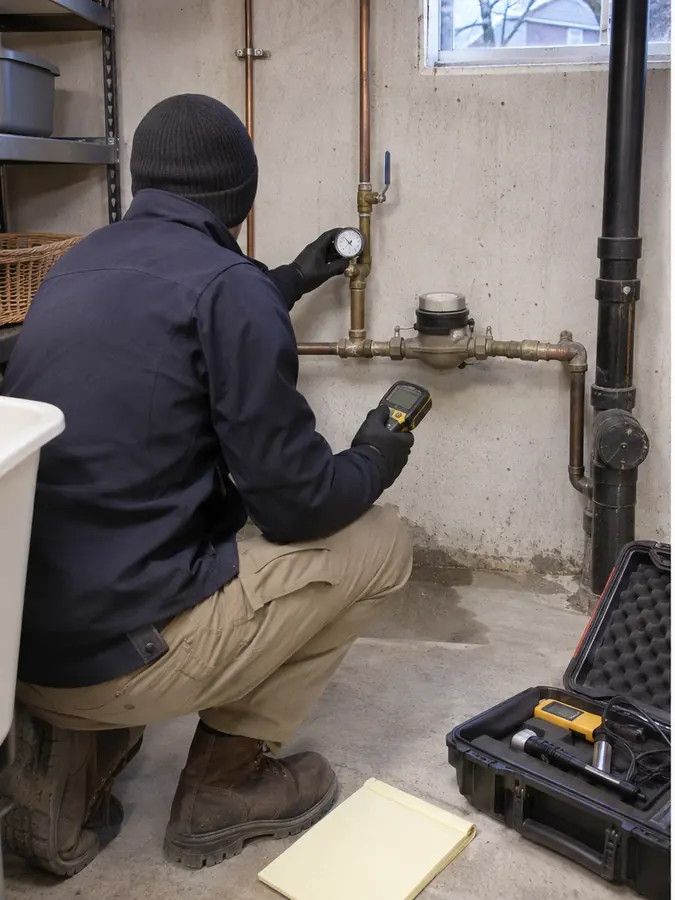 Before
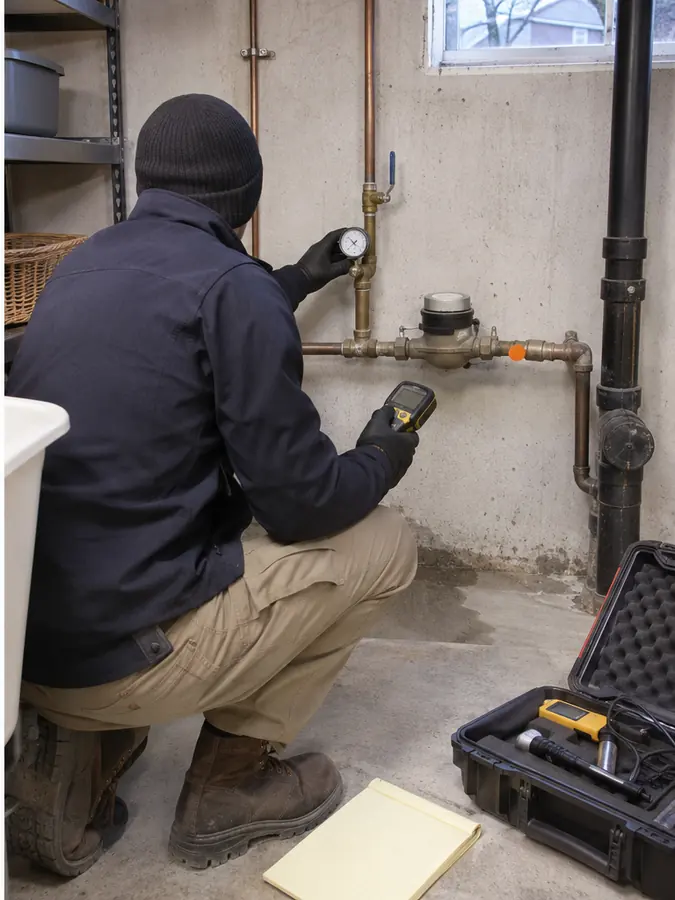 After
Verified Non-Invasive Leak Pinpointing (Fixture and Appliance Leak Detection)
Every fixture and appliance leak detection visit includes surface marking and a dated written report with photos or video before any repair begins.
Fix It Yourself or Call a Tech?
Some fixture leaks are easy to fix, and we tell you so. A flapper costs a few dollars and takes a few minutes to replace. A loose slip nut under a sink needs a wrench. Other leaks need a plumber: a shower valve behind a wall, a corroded heater fitting or a toilet flange under a floor.
Here is a simple guide.
| Leak | Often a do it yourself fix | Call a plumber |
|---|---|---|
| Toilet flapper | Yes | If the fill valve or tank is cracked |
| Slip joint under a sink | Yes | If the trap or drain is corroded |
| Washer hose | Yes | If the valve behind the wall leaks |
| Shower valve | No | Yes |
| Water heater fitting | Sometimes | Yes, if corroded |
| Wax ring | Sometimes | If the floor is soft |
We do not do the repair ourselves in this service. We find the leak, and we tell you what it takes to fix it.
Proof From Past Fixture and Appliance Leak Detection Visits
Here is what neighbors told us after we found their fixture leaks.
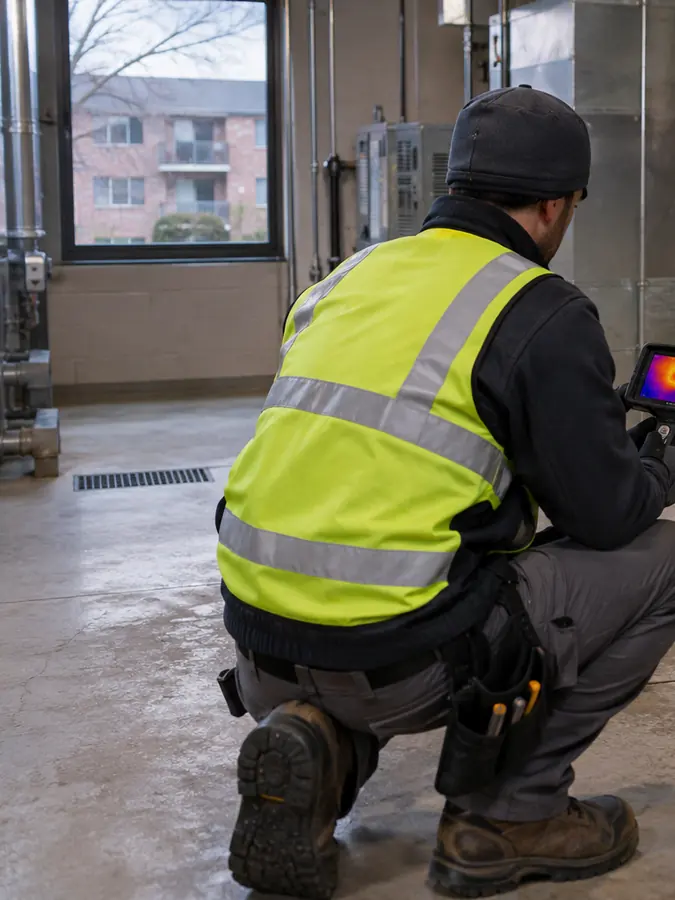 Before
 After
Verified Non-Invasive Leak Pinpointing (Fixture and Appliance Leak Detection)
Every fixture and appliance leak detection visit includes surface marking and a dated written report with photos or video before any repair begins.
Test Kit and Fixture Report
We carry the tools that make hidden fixture leaks visible, and we put every result in writing.
- Dye tablets and test strips: For toilet tanks and drains.
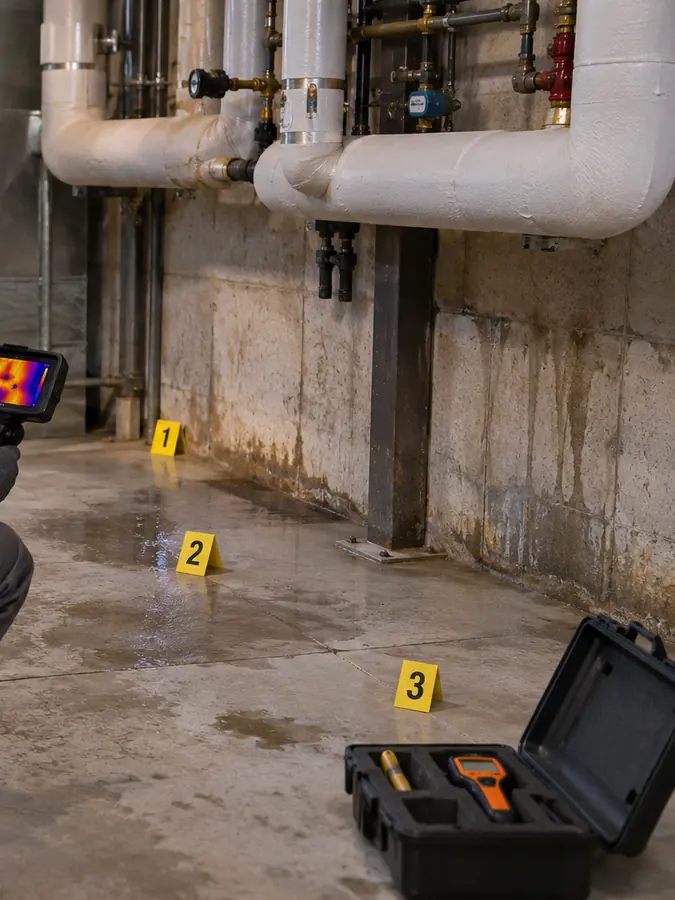
- Moisture meters and a thermal camera: For floors, walls and cabinets.
- Pressure test gear: To isolate supply lines.
- Camera and mirror: To see behind and under fixtures.
- Photos and notes: A record of each test.
- Written report: What leaks, how much it costs you and how to fix it.
Fixture and Appliance Leak Detection Quotes Explained
Fixture and appliance leak detection costs $150 to $300 in Downers Grove for most homes. We give you the exact price before we start, and our visits begin at $150.
| Situation | Our price |
|---|---|
| One or two fixtures | $150 to $200 |
| Whole bathroom or kitchen | $200 to $250 |
| Whole house fixture sweep | $250 to $300 |
- Number of fixtures: More fixtures mean more tests.
- Access: Open cabinets and clear floors save time.
- Hidden plumbing: Walls and floors take longer.
A fixture check costs less than a few weeks of wasted water, and it tells you exactly what to repair.
Why Homeowners Choose Our Team for Fixture Leaks
Fixture leaks are small, and small leaks add up. Here is what you get from us.
What to Do While You Wait
- Check the meter: With every fixture off, a moving dial means a hidden leak.
- Test your toilets yourself: Add food coloring to each tank and wait 15 minutes without flushing.
- Look under every sink: A damp cabinet or a stained pipe is a clue.
- Close the shutoff valve for any leaking fixture: It stops the loss until we arrive.
- Photograph stains with dates: It helps us see how the leak is changing.
What to Expect on the Day
Our technician arrives with the test kit. We start with the meter, then work through each fixture. Most visits take one to two hours, depending on the number of fixtures. We explain each result as we go. Before we leave, we tell you what leaks, what it costs you and what to do about it, with prices.
Where We Look Room by Room
Leaks cluster in a few rooms. Here is what we check in each one.
Bathrooms
- Toilets: Dye test, base moisture and supply line.
- Showers and tubs: Flood test, valve seals and drain.
- Sinks: Supply lines, shutoff valves, trap and faucet base.
Kitchen
- Sink and faucet: Connections, sprayer hose and disposal.
- Dishwasher: Supply line, drain hose and door seal.
- Refrigerator: Ice maker line and valve.
Laundry Room
- Washer hoses and valves: Cracks, bulges and drips at the fittings.
- Drain standpipe: Overflow and joint leaks.
- Utility sink: Faucet and trap.
Basement or Utility Area
- Water heater: Tank base, fittings, relief valve and pan.
- Softener and filter: Connections and drain line.
- Main shutoff and meter: Valve stems and fittings.
Quick Checks Before We Arrive
- Look at your latest water bills: A rise over two billing periods tells us the leak is steady.
- Check the toilets with food coloring: Color in the bowl without flushing means a leak.
- Dry paper test under sinks: Wipe a pipe with a dry paper towel and look for dampness.
- Look behind the washer: Check the hoses and the wall behind them.
- Check the water heater pan: Water in the pan points to a tank or fitting leak.
Fixture Checks Around Downers Grove
We test fixtures in homes across Downers Grove, from older ranches to newer townhomes and condos. Older neighborhoods tend to show worn valves and flappers. Newer buildings tend to show appliance hoses and supply line fittings. Wherever you live, the process is the same: we test, we show you and we report.
What Your Report Tells You
After the tests, you get a report that lists every fixture we checked, even those that passed. A passed fixture is useful information, because it saves you from replacing parts that work. For each failed fixture, the report includes a photo, the test that showed the leak, an estimate of how much water it wastes and the repair options with prices.
We also rank the leaks. A running toilet that wastes hundreds of gallons a day comes first. A small drip at a faucet comes later. That way your first repair dollar goes where it saves the most. If a leak is bigger than a fixture, such as a failing supply line in a wall, we say so plainly and tell you what test would come next.
Many homeowners forward the report to a plumber and ask for a quote on exactly those items. Others replace a flapper or a hose themselves the same weekend. Either way, you are working from facts.
Common Fixture Leaks and What They Waste
| Leak | Rough waste | Typical cause |
|---|---|---|
| Silent flapper leak | Dozens to hundreds of gallons a day | Worn flapper or chain |
| Running fill valve | Hundreds of gallons a day | Failed fill valve or float |
| Dripping faucet | Several gallons a day | Worn cartridge or washer |
| Weeping supply line | Slow but constant | Loose fitting or aging hose |
| Water heater relief valve | Varies, often hidden | High pressure or a worn valve |
These numbers are rough, because every leak is different. The point is that small leaks add up, and a test tells you which one matters.
Waiting on a Fixture Leak Costs More
A fixture leak runs all day, every day. A leaking toilet can waste hundreds of gallons a day, and you may not see it for months. A leaking supply line can rot a cabinet or soften a floor. The repair gets bigger the longer you wait. A visit from us costs $150 to start, and it usually saves more than that. Call us at (630) 780-4025 and we will tell you what to expect.
What People Ask About Fixture and Appliance Leak Detection
How Do You Find a Fixture Leak?
We test each fixture with dye, moisture meters and pressure checks, and we read the meter with everything off.
How Much Does It Cost?
Most visits cost $150 to $300 in Downers Grove. You get an exact price before we start.
Can You Find a Silent Toilet Leak?
Yes. A dye tablet shows a flapper leak in about 15 minutes.
Do You Fix the Fixture?
We find the leak and tell you what to fix. Many repairs are simple, and we say so.
Will You Open Walls?
No. We test from the outside first so any opening is small.
How Do I Know Which Appliance Is Leaking?
We check each hose, valve and line, and we use a moisture meter to trace the water.
Related Leak Detection Services & Local Coverage for Fixture and Appliance Leak Detection
Explore related non-invasive leak detection services and nearby DuPage County service areas:
- Appliance Leak Detection
- shower and tub leak detection in Downers Grove
- Leak Inspection and Testing
- water leak detection
- leak detection in Clarendon Hills
- Bolingbrook leak detection service
- leak detection around Downtown Downers Grove
- Deer Creek leak checks
- leak detection in Woodridge
- Willowbrook leak detection service
- serving Burr Ridge homes
- DuPage County leak detection
Reviewed by Leak Detection Downers Grove Field Specialists (10+ Years DuPage County Experience) — Non-invasive acoustic listening, thermal imaging, moisture mapping, tracer gas, and sewer camera procedures verified for Downers Grove and DuPage County homes and businesses. Learn more about our leak detection team or request a free quote.
Service Dispatch Map: Fixture and Appliance Leak Detection
Dispatched from 5050 Thatcher Rd, Downers Grove, IL 60515 across Downers Grove and DuPage County, IL. Call or text (630) 780-4025 for your quote.