
Heating and HVAC Leak Detection in Downers Grove
Heating and HVAC leak detection Downers Grove IL homeowners call us for starts with a boiler that keeps needing water or an AC that drips where it should not. We find leaks in radiant floors, boilers, baseboard loops and AC drains, using pressure tests, thermal imaging and tracer gas. Visits start at $250, and you get a free quote first. Call or text us at (630) 780-4025.
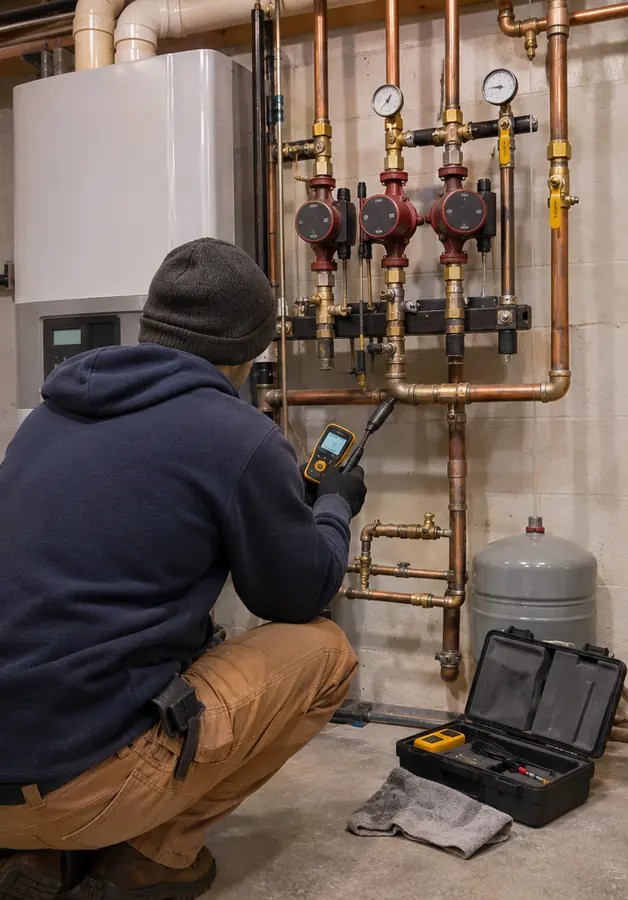
Heating Water Disappearing From the System
Heating and HVAC leak detection in Downers Grove IL is the service we perform when water is leaking from a heating or cooling system. A boiler that keeps needing makeup water, a pressure gauge that falls overnight, cold zones, a damp floor over radiant tubing, a stain on the ceiling below an air handler or a puddle by the furnace all point to a leak. A boiler that keeps needing make up water is often leaking somewhere in the loop, and that loop can run under a slab, behind plaster or above a ceiling. Our technicians use pressure tests, thermal imaging and tracer gas to find the leak, then mark it and send you a written report with photos.
We have been tracing heating and cooling leaks in Downers Grove for more than 10 years. When you call, we ask what the system is, how often it needs water and where you see moisture. That already narrows the list.
A gas smell is an emergency: leave the building and call the gas utility or 911 from outside. Our gas line testing is for checking piping after the utility has made the area safe, and is not a substitute for calling the utility.
Our Heating and HVAC Leak Detection Services
Everything below is included in the visit price.
Boiler and Loop Pressure Test
We isolate the boiler from the loop and test each zone to see which one loses pressure.
Thermal Imaging of Radiant Tubing
Once a pressure test confirms the loop is losing pressure, thermal imaging maps the tubing and shows cool or wet areas.
Tracer Gas Testing
For slow leaks in buried loops, a safe tracer gas follows the pipe and shows where it escapes.
Moisture Mapping Around Equipment
We check floors, walls and ceilings near boilers, furnaces and air handlers.
Condensate Drain Test
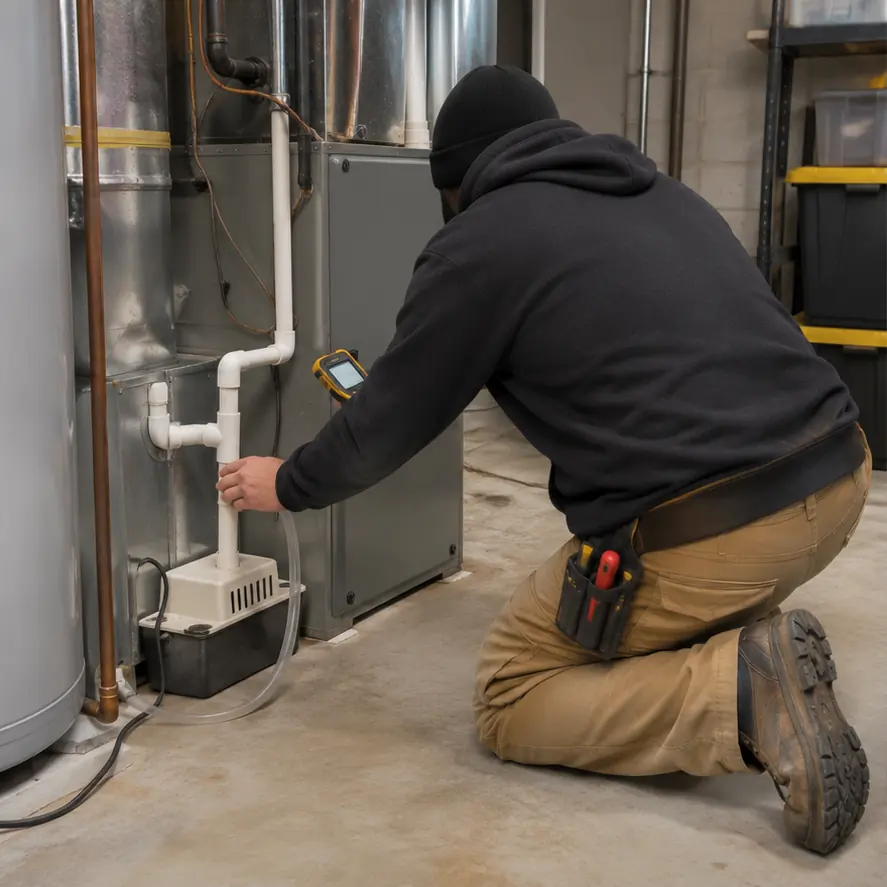
We test AC condensate lines for clogs and leaks.
Written Findings With Photos
You receive photos, readings and repair options with prices.
Signs of a Heating or Cooling Leak
| What you notice | What it often means | What we test first |
|---|---|---|
| Boiler needs frequent makeup water | Leak in the loop | Pressure test by zone |
| Pressure drops overnight | Slow leak | Isolation test |
| A cold zone or cold floor patch | Radiant tubing leak or air lock | Thermal scan |
| Damp floor over radiant heat | Tubing leak | Pressure test and thermal scan |
| Water near the furnace or air handler | AC condensate or coil leak | Drain line test |
| Ceiling stain under an air handler | Condensate overflow | Pan and drain check |
| Rising heating bills | Loss of heat or water | System check |
Where HVAC Systems Leak
Radiant Tubing in Slabs and Floors
- What you notice: Cold zones and damp floors.
- Why it happens: Old tubing corrodes or joints fail.
Boiler Fittings and Valves
- What you notice: Drips at the boiler and a steady pressure drop.
- Why it happens: Valves and unions age.
Baseboard and Radiator Loops
- What you notice: Wet baseboards and stains.
- Why it happens: Pipes corrode where they are hidden.
AC Condensate Lines and Pans
- What you notice: Water under the air handler or ceiling stains.
- Why it happens: Algae clogs the drain and the pan overflows.
Coils and Humidifiers
- What you notice: Water around the furnace.
- Why it happens: Seals and pans fail.
Boilers and Radiant Floors in Older Homes
Public census based data puts the median Downers Grove home at 1974, and about 64 percent of homes date from 1979 or earlier. Many of those homes have boilers, baseboard heat or radiant floors that were installed decades ago. Copper is commonly put at 50 plus years, and black iron and early plastic tubing wear in their own ways. A radiant slab installed in the 1970s may now be showing its age. A boiler with a long loop can lose water slowly through a single pinhole.
Radiant tubing is mapped with thermal imaging once a pressure test confirms the loop is losing pressure. That order matters. It keeps us from searching a loop that is fine. We note the type and age of your system in our report.
Tracing Water Loss in a Heating Loop
Our visit follows four steps.
- You call or text us: Tell us how often the boiler needs water and where you see moisture. We ask the age of the system.
- We pick a window with you: We offer the earliest slot and ask you not to add water beforehand if you can wait.
- We trace the leak: We pressure test each zone, scan with thermal imaging and use tracer gas if needed.
- We send your report: You receive photos, readings and repair options with prices.
- We rank the findings: If more than one leak exists, we say which is biggest.
- We stay available for your heating contractor: If they have questions, call us.
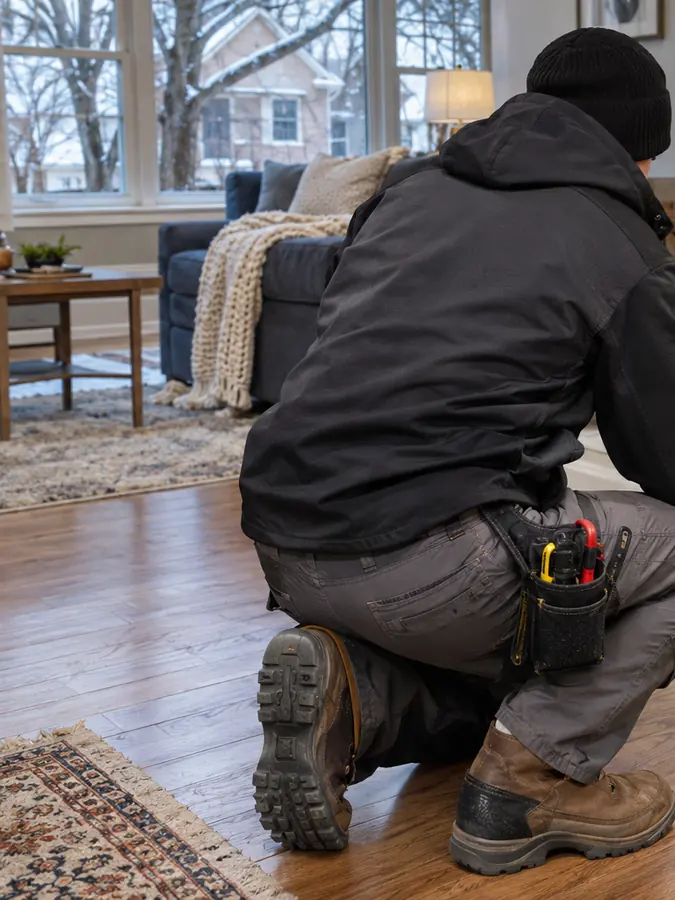 Before
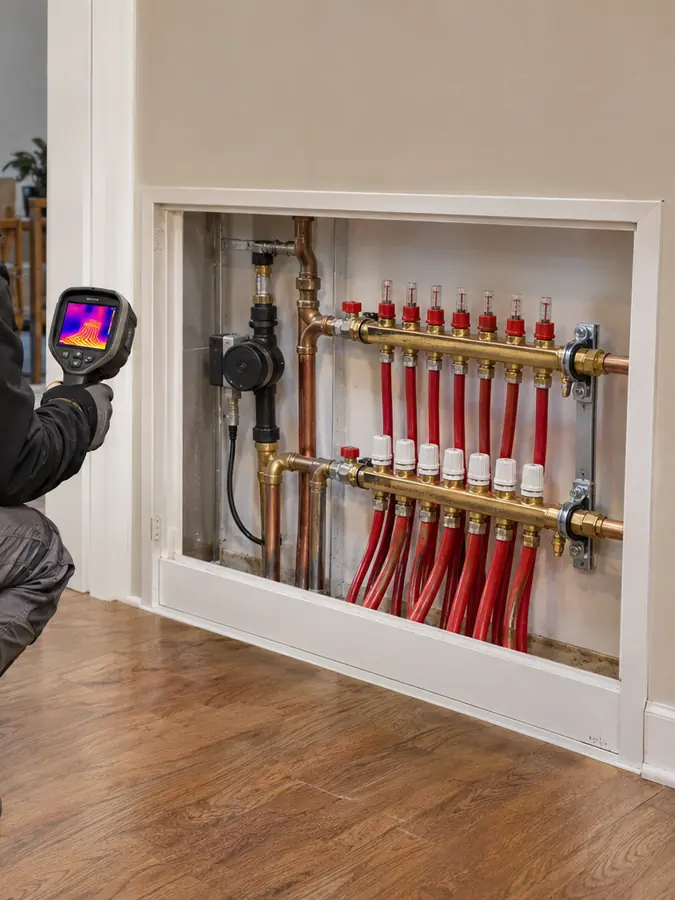 After
Verified Non-Invasive Leak Pinpointing (Heating and HVAC Leak Detection)
Every heating and hvac leak detection visit includes surface marking and a dated written report with photos or video before any repair begins.
Boiler, Radiant or AC Drain?
Each system leaks in its own way, and each needs a different fix.
Boiler and Baseboard
These loops are closed. If the pressure falls, water is escaping somewhere. We find it by zone.
Radiant Floor
Radiant tubing runs through slabs and floors. We confirm the loss with a pressure test, then use thermal imaging to map the loop.
AC Condensate
AC drains carry water away from the coil. Clogs cause overflow. We trace the drain and test the pan.
Humidifiers and Furnace Components
These add water to the system and can leak into the furnace area. We check them in the same visit.
Real Heating and HVAC Leak Detection Visits
Here is what neighbors told us after we found the leak in their heating system.
 Before
 After
Verified Non-Invasive Leak Pinpointing (Heating and HVAC Leak Detection)
Every heating and hvac leak detection visit includes surface marking and a dated written report with photos or video before any repair begins.
HVAC Test Equipment and Findings
- Pressure gauges and test plugs: To isolate loops.
- Thermal camera: Shows warm and cool patterns in floors.
- Tracer gas kit: For slow, buried leaks.
- Moisture meters: For walls, floors and ceilings.
- Photos and notes: A record of each test.
- Written report: The leak, the evidence and the options.
Is Heating and HVAC Leak Detection Worth the Cost?
Heating and HVAC leak detection costs $250 to $600 in Downers Grove. We give you the exact price before we start, and our visits begin at $250.
| Situation | Our price |
|---|---|
| AC drain or boiler fitting leak | $250 to $325 |
| Boiler loop pressure test | $325 to $450 |
| Radiant floor mapping | $450 to $600 |
A heating leak can cost more than the visit in water, repairs and rust damage. A mapped leak means a small repair instead of tearing up a floor.
Why Homeowners Choose Our Team for Heating Leaks
What to Do While You Wait
- Note the boiler pressure each morning.
- Do not keep adding water without tracking it.
- Photograph any wet spots.
- Turn off the system if water is leaking onto electrical parts.
What to Expect on the Day
Our technician arrives with gauges, a thermal camera and test gear. We start with a pressure test, then scan and trace. Most visits take two to four hours. We explain the findings and the options.
How a Heating Loop Loses Water
A closed hydronic loop should hold its pressure for years. The boiler sends hot water through pipes to radiators, baseboards or radiant tubing, and the water returns to be heated again. A small automatic fill valve tops up the system if pressure falls, which is why a leak can hide for a long time. The boiler quietly adds water, and nobody notices until the bill, the rust or the cold zone shows up.
Here is how to read the clues.
A pressure gauge that falls overnight: The loop is losing water.
A fill valve that clicks or a meter that moves on the fill line: The boiler is adding water.
Rust at fittings and on the boiler base: Water has been escaping and drying.
Cold or noisy zones: Air or mineral deposits are entering through leaks.
A wet baseboard or a damp ceiling: A pipe is leaking nearby.
If you track how much water your boiler uses, even roughly, you give us a head start. A small system might need a cup of water a week. A leaking system might need a gallon a day.
Radiant Floor Heating: What We Find
Radiant tubing is often embedded in concrete or under finished floors. When a loop fails, water leaks into the slab or the subfloor. The leak can run for a long time without a visible sign, because concrete absorbs water. Warm spots, a damp patch on the floor or a rise in boiler makeup water are the usual signs.
Our process starts with isolating each loop and pressure testing it. Once we know which loop loses pressure, we use a thermal camera while the loop is warm, because a leak shows as a cool or wet area. For slow leaks, tracer gas follows the tubing and shows the escape point. Then we mark the spot on the floor and estimate the depth.
Repairs vary. Some leaks can be fixed with a small cut in the slab and a repair coupling. Others call for rerouting a loop or abandoning it and heating the room another way. We lay out the options, with rough costs, in the report.
AC Condensate Leaks: A Summer Problem
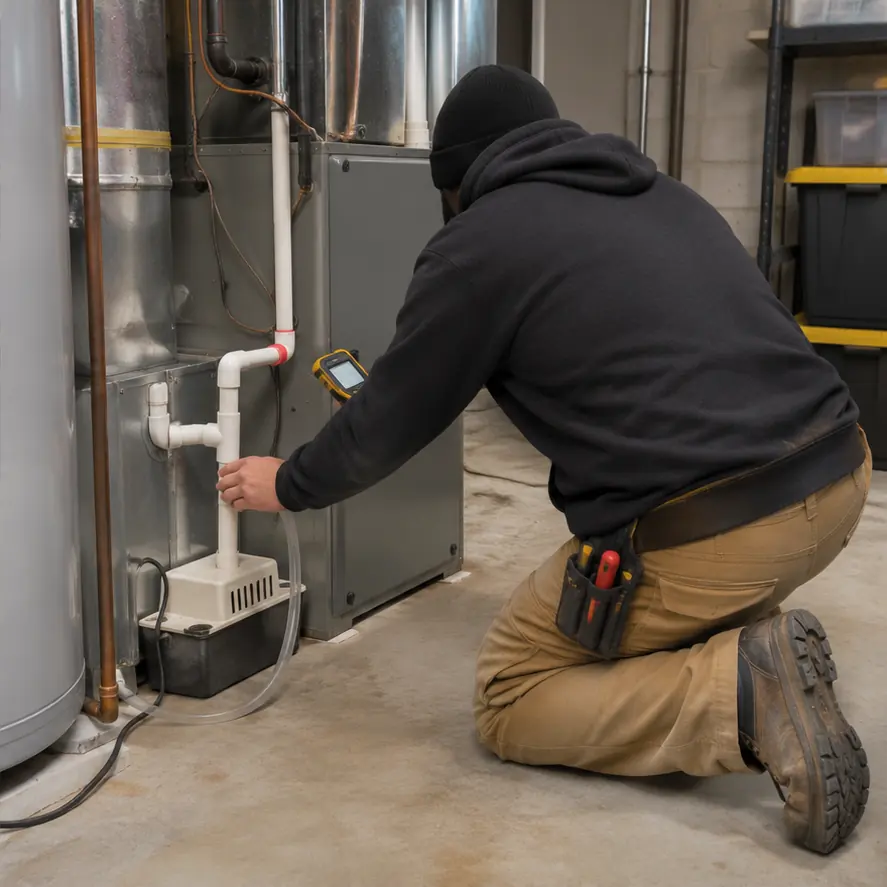
Air conditioners pull moisture from the air. That water drains through a condensate line to a floor drain, a pump or the outdoors. Algae and sludge can clog the line, and the water then backs up into the drain pan and overflows. The first sign may be a stain on a ceiling below the air handler or a puddle near the furnace.
We trace the drain line, test the pan and check whether a float switch is working. A clogged line is often a simple fix. A cracked pan or a leaking coil is a larger repair, and we say which one you have. Many homeowners add an overflow switch to avoid a repeat.
Quick Checks Before We Arrive
- Read the boiler gauge in the morning and the evening: A drop of several pounds points to a leak.
- Look at the fill line: A meter or valve that moves tells us the system is adding water.
- Walk the floors in socks: Cold patches and warm patches help us map the loop.
- Look at the ceiling under the air handler: Rings and drips point to condensate overflow.
- Check the drain pan and the drain line: Standing water or slime shows a clog.
- Gather system records: Install dates, past repairs and water treatment notes help us.
Safety First: Gas, Water and Electricity
Heating systems mix fuel, water and power. If you smell gas, leave the building and call the gas utility or 911 from outside. Do not turn lights on or off, and do not use your phone inside. If water is dripping onto electrical parts, turn off the breaker for the system if you can reach it safely. If a boiler is hot and leaking steam, stay away and call a heating professional.
We are not a substitute for emergency service. We find the leak after the area is safe, and we help you decide what repair to request. Our gas line testing service checks piping once the utility has cleared the situation.
What Heating Leaks Cost Over a Season
A heating loop that leaks a gallon a day uses more than 200 gallons over a heating season, and the water brings fresh oxygen, which speeds rust in the boiler and the pipes. A leak in a radiant slab can also soak the floor and spread cool spots across rooms, which makes you raise the thermostat and burn more fuel. A visit from us costs a fraction of one season of that waste.
Public census based data puts the median Downers Grove home at 1974, and about 64 percent of homes date from 1979 or earlier. If your home is in that group and your system is original or lightly updated, a check is a sensible habit before the cold months.
HVAC Leak Visits Around Downers Grove
We trace heating and cooling leaks across Downers Grove, from older homes with boilers and baseboard heat to newer homes with radiant floors and high efficiency systems. Older homes often show piping and fitting failures. Newer homes sometimes show installation issues. Wherever you live, the process is the same: we test, we locate and we report.
Waiting on a Heating Leak Costs More
A leak in a heating system adds water and oxygen, which speeds corrosion. It can also soak floors and ceilings and lead to mold. A visit from us starts at $250, and it usually saves more than that by pointing the repair at the actual leak. Call us at (630) 780-4025 and we will tell you what to expect.
Things Owners Ask About Heating and HVAC Leak Detection
We pressure test the loop, scan with thermal imaging and use tracer gas.
Most visits cost $250 to $600.
Yes. We confirm it with pressure, then map it.
We find the leak and tell you what to ask a heating contractor.
There is likely a leak somewhere in the loop.
Leave the building and call the gas utility or 911 from outside.
Related Leak Detection Services & Local Coverage for Heating and HVAC Leak Detection
Explore related non-invasive leak detection services and nearby DuPage County service areas:
Reviewed by Leak Detection Downers Grove Field Specialists (10+ Years DuPage County Experience) — Non-invasive acoustic listening, thermal imaging, moisture mapping, tracer gas, and sewer camera procedures verified for Downers Grove and DuPage County homes and businesses. Learn more about our leak detection team or request a free quote.
Service Dispatch Map: Heating and HVAC Leak Detection
Dispatched from 5050 Thatcher Rd, Downers Grove, IL 60515 across Downers Grove and DuPage County, IL. Call or text (630) 780-4025 for your quote.