
Basement and Foundation Leak Detection in Downers Grove
Basement leak detection Downers Grove IL homeowners call us for starts with one question: where is this water coming from? We find out whether your basement water is a plumbing leak, groundwater or a drain problem, using moisture mapping and plumbing isolation tests. Visits start at $250, and you get a free quote first. Call or text us at (630) 780-4025.
Water in the Basement Again
Basement leak detection in Downers Grove IL is the service we perform when a basement is wet and the cause is unclear. A damp corner, a puddle by the floor drain, a wet wall after rain, a musty smell or a rising bill with no explanation can each point to a different source. A plumbing leak is fixed one way, groundwater another and a drain problem a third. Guess wrong and you spend money on a repair that does not work. Our technicians use moisture mapping, thermal imaging and plumbing isolation tests to separate the possibilities, and we tell you which one it is.
We built this service for homeowners who have already tried one fix and still have water. Our team has been tracing basement water in Downers Grove homes for more than 10 years. When you call, we ask when the water appears: after rain, after showers or all the time. That single question already narrows the list.
Our Basement and Foundation Leak Detection Services
Everything below is included in the visit price.
Moisture Mapping
We scan walls, floors and the base of the walls with moisture meters and mark every reading on a sketch.
Thermal Imaging
A thermal camera shows temperature differences that mark wet areas behind finishes.
Plumbing Isolation Test
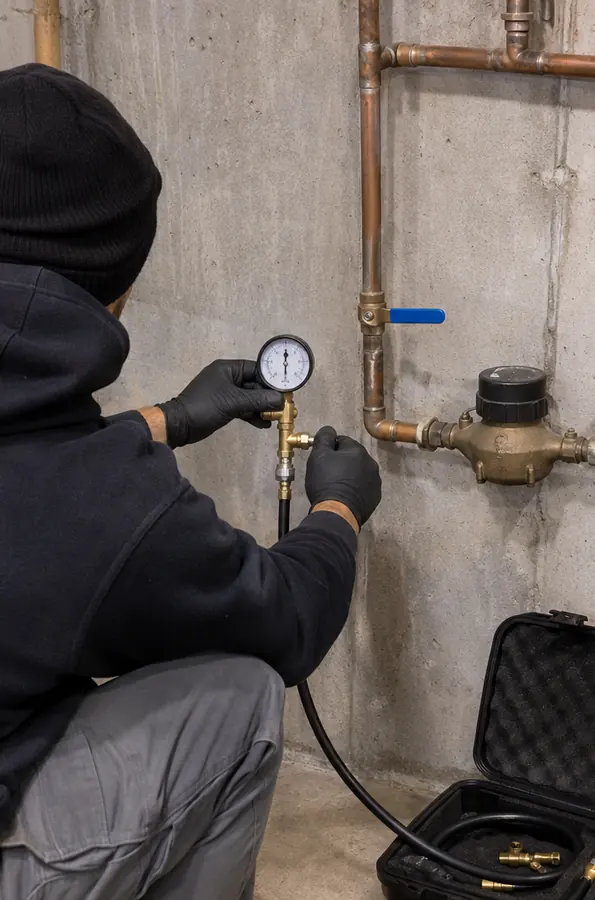
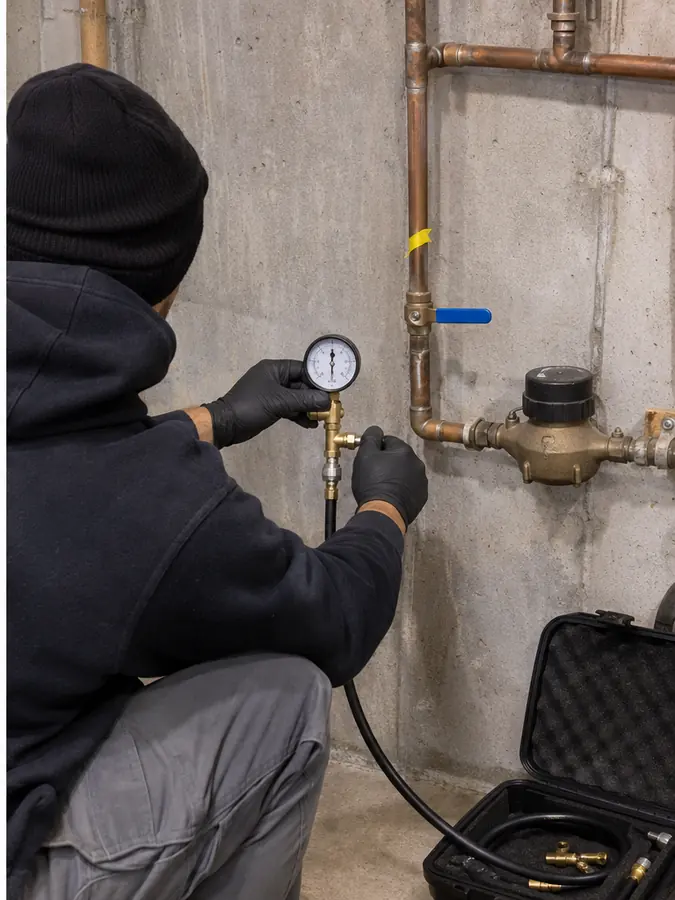
We read the meter with fixtures off, then isolate supply lines to see whether a plumbing leak is feeding the water.
Drain and Floor Drain Check
We check floor drains, laundry standpipes and visible drain lines for leaks and backups.
Foundation and Joint Inspection
We examine cracks, cove joints, wall penetrations and window wells for water entry.
Written Source Report
You receive photos, readings and a clear statement of the likely source and next steps.
Reading the Signs of Basement Water
The pattern of the water tells us a lot.
| What you notice | What it usually means | What we test first |
|---|---|---|
| Wet only after heavy rain | Groundwater or surface drainage | Walls, cove joint, window wells |
| Wet after showers or laundry | Drain or supply leak | Drain lines and isolation test |
| Wet all the time, rain or not | Plumbing leak or high water table | Meter and moisture map |
| Puddle at the floor drain | Drain backup or high groundwater | Drain check and sump |
| Damp wall with salt streaks | Seepage through foundation | Foundation inspection |
| Rising bill, damp slab | Slab or supply leak | Meter and thermal scan |
Where Basement Water Comes From
Plumbing Leaks
- What you notice: Damp spots that do not follow rain.
- Why it happens: A supply, drain or heater line leaks inside a wall or slab.
Groundwater Seepage
- What you notice: Damp walls and floors after rain.
- Why it happens: Water pressure in the soil pushes through pores and cracks.
Foundation Cracks
- What you notice: Water along a visible crack.
- Why it happens: Settling and shrinkage open cracks.
Cove Joint Leaks
- What you notice: Water along the line where the floor meets the wall.
- Why it happens: The joint between slab and wall lets water through.
Window Well Overflow
- What you notice: Water below a basement window.
- Why it happens: Wells fill with water and debris and spill inside.
Drain Backup
- What you notice: Water at the floor drain.
- Why it happens: A blocked lateral or heavy rain sends water back up.
Creeks, Drainage and Basement Moisture
Downers Grove has a lot of water around it. Lacey Creek, Prentiss Creek and St. Joseph Creek run through the Village. The Village counts about 150 localized poor drainage areas. A flash flood hit on August 12, 2025, and a heavy storm on July 4, 2026 dropped about 6 inches of rain in Darien, next door. In these conditions, the water table rises and basements take on moisture that would not appear in a dry year.
The Village does not pump out basements after flooding, so homeowners deal with it on their own. That is why knowing the source matters: a sump pump, a drain tile fix or a sealing job all work for groundwater, but none of them fix a plumbing leak. Public census based data puts the median Downers Grove home at 1974, and about 64 percent of homes date from 1979 or earlier. Older foundations often have settled, cracked or aging cove joints.
Tracing Basement Water to Its Source
Our visit follows four steps.
- You call or text us: Tell us when the water shows up and where. We ask the age of the home and whether you have a sump pump.
- We pick a window with you: We offer the earliest slot and ask you not to move items from the wet area.
- We trace the source: We map moisture, run the plumbing isolation test, check drains and inspect the foundation.
- We send your report: You receive photos, readings and the likely source with repair options and prices.
- We separate the causes: If more than one source is present, we say which is biggest.
- We stay available for your contractor: If your contractor has questions about the report, call us.
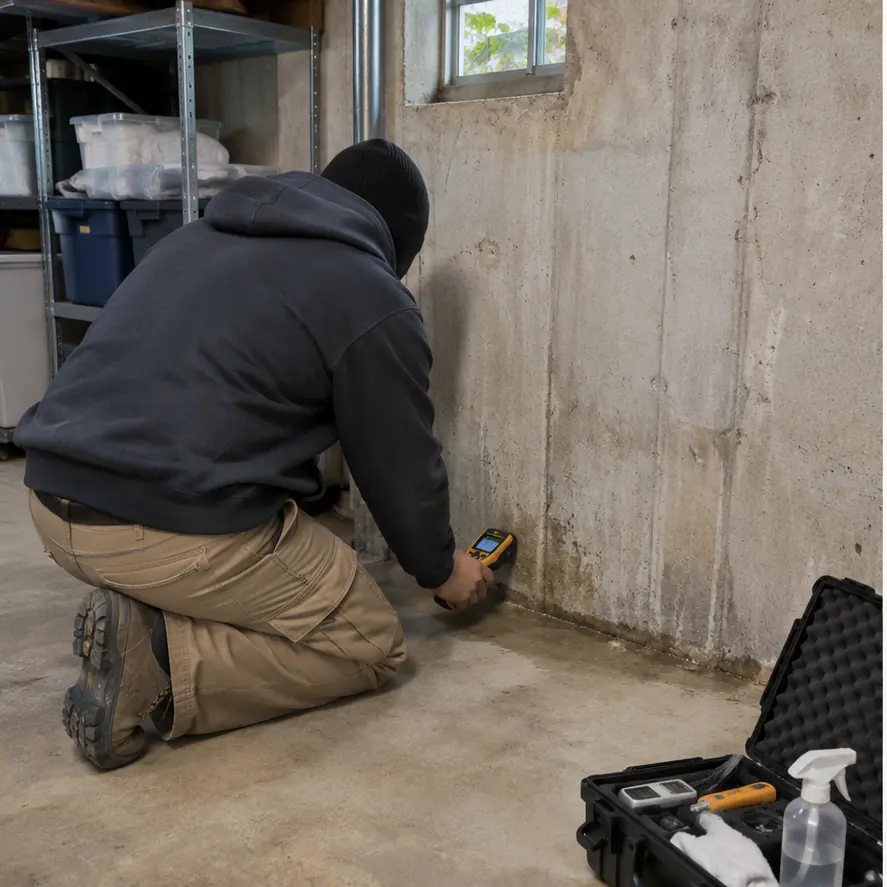 Before
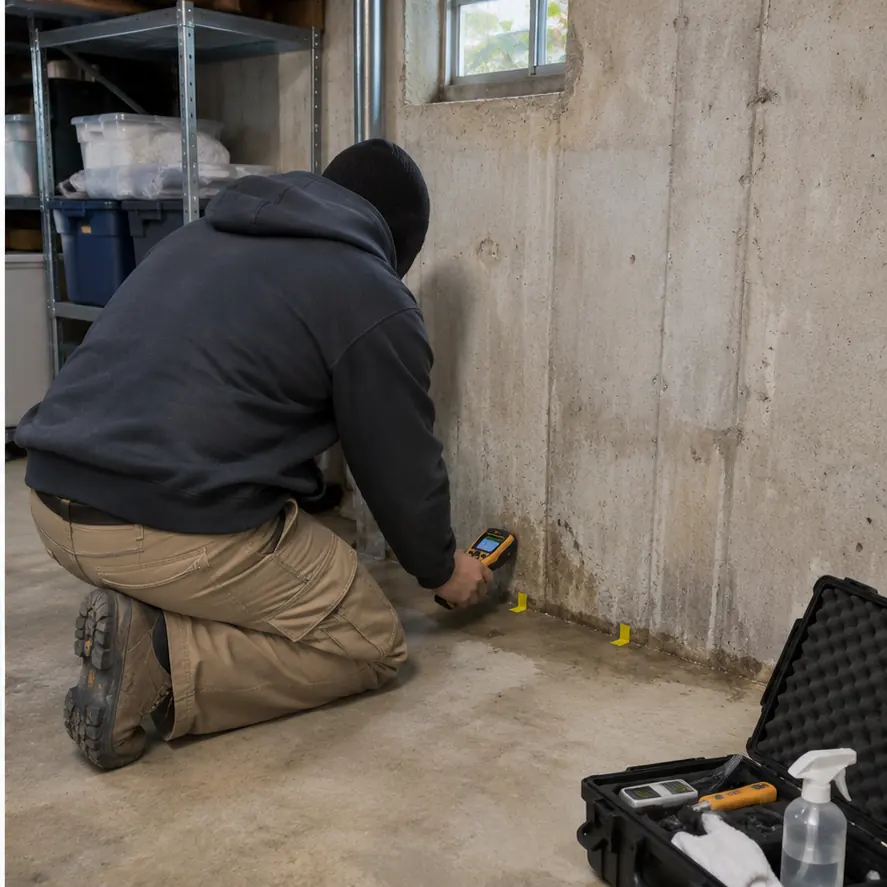 After
Verified Non-Invasive Leak Pinpointing (Basement and Foundation Leak Detection)
Every basement and foundation leak detection visit includes surface marking and a dated written report with photos or video before any repair begins.
Leak, Seepage or Flood?
These three are different problems with different fixes.
A Leak
A leak comes from a pipe under pressure. It runs whether or not it rains and it shows on the meter. We find it with the isolation test and moisture map.
Seepage
Seepage is water moving through concrete or soil. It follows the weather and often leaves white salt marks. We find it with the foundation inspection and thermal scan.
A Flood
A flood is a large, sudden intrusion, usually from a heavy storm or a backup. We help you document damage and trace moisture after it.
What Clients Say About Basement and Foundation Leak Detection
Here is what neighbors told us after we found the source of their basement water.
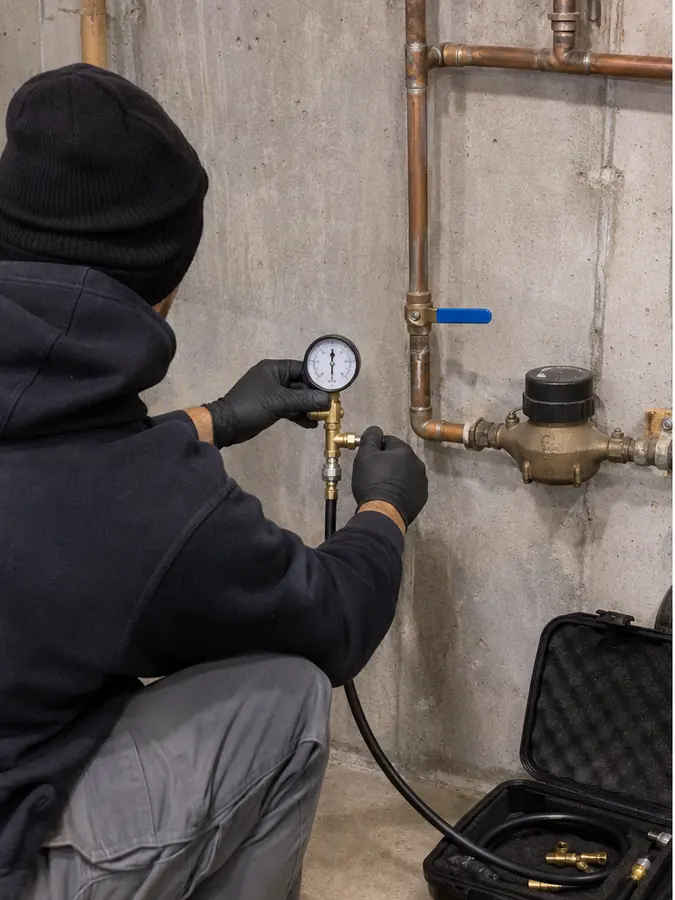 Before
 After
Verified Non-Invasive Leak Pinpointing (Basement and Foundation Leak Detection)
Every basement and foundation leak detection visit includes surface marking and a dated written report with photos or video before any repair begins.
Moisture Gear and Source Report
We carry the equipment that makes hidden moisture visible.
- Pin and pinless moisture meters: Read moisture in drywall, wood and concrete.
- Thermal camera: Shows temperature differences from wet areas.
- Pressure and meter test gear: Isolates plumbing lines.
- Camera and mirror: Inspects drains and tight spaces.
- Photos and sketches: A record of each reading.
- Written report: The source, the evidence and the options.
Budgeting for Basement and Foundation Leak Detection
Basement and foundation leak detection costs $250 to $550 in Downers Grove. We give you the exact price before we start, and our visits begin at $250.
| Situation | Our price |
|---|---|
| One wet area | $250 to $325 |
| Whole basement | $325 to $450 |
| Multiple sources or finished walls | $450 to $550 |
- Size of the basement: More area means more readings.
- Finishes: Finished walls take more care.
- Number of sources: Each possible source adds a test.
A visit costs less than guessing wrong on a sealing job or a pump, and it gives your contractor a clear scope.
Why Homeowners Choose Our Team for Basement Water
What to Do While You Wait
- Lift items off the floor: Move boxes and furniture to dry areas.
- Run a fan or dehumidifier: It slows mold.
- Photograph the water and note the time: Dated photos show the pattern.
- Check the sump pump: Make sure it runs and the discharge line is clear.
- Close the main if you suspect a pipe leak.
What to Expect on the Day
Our technician arrives with the meters, the thermal camera and the test kit. We start with the meter and a plumbing isolation test, then map moisture across the basement. We inspect the floor drain, the foundation and the window wells. Most visits take two to three hours. We explain the findings and the next steps with prices.
What Happens After the Report
Once you have the source, you know who to call. We explain the usual next steps in plain terms.
If It Is Plumbing
- Who fixes it: A licensed plumber.
- What you do: Share our report, which names the line and marks the spot.
If It Is Groundwater or Seepage
- Who fixes it: A waterproofing contractor, a landscaper or both.
- What you do: Ask about interior drain tile, a sump pump, exterior grading or crack sealing.
If It Is a Drain Backup
- Who fixes it: A sewer contractor.
- What you do: Ask for a camera scope, which we also offer.
If It Is a Window Well
- Who fixes it: A handyman or landscaper.
- What you do: Clear the well, fix drainage and consider a cover.
Quick Checks Before We Arrive
- Look at the pattern: Note whether water appears after rain, after laundry or at random.
- Check gutters and downspouts: Water that dumps near the foundation can seep in.
- Look at the grade around the house: The ground should slope away from the walls.
- Check the sump pump: Lift the lid and look for water in the pit.
- Look for salt streaks: White marks on walls point to seepage.
- Check the water meter: A moving dial with everything off suggests a plumbing leak.
Seasons and Storms: When Basement Water Shows Up
Basement water follows the weather, and knowing the season helps us read the cause.
| Season | What tends to happen | Common source |
|---|---|---|
| Spring thaw | Soil is saturated and the water table is high | Seepage, window wells |
| Summer storms | Sudden heavy rain overwhelms drainage | Cove joint, sump overload, sewer backup |
| Fall | Leaves clog gutters and wells | Window wells, downspouts |
| Winter | Frozen ground sends water to the walls | Foundation cracks |
Rain can also hide a plumbing leak. A homeowner sees water after a storm and assumes it is groundwater, while a pipe has been dripping for weeks. Our isolation test settles it, because it runs the same on a dry day or a wet one.
Basements in Older Downers Grove Homes
Many Downers Grove homes were built in the 1950s through the 1970s, and their basements reflect it. Poured concrete walls and block walls both show cracks as they age. Floor slabs may have been poured without a vapor barrier, so moisture rises through the concrete. Cove joints, where the slab meets the wall, were often not sealed. Floor drains and laundry standpipes may tie into old cast iron or clay lines. Contractors commonly put cast iron drains at 50 to 75 years, so some drain lines are in the range where leaks begin.
Finished basements add another layer. Drywall, paneling and carpet hide moisture, so a plumbing leak or seepage can go on behind a finish for a long time. A moisture map and a thermal scan let us see behind those finishes without opening them. If you are thinking about finishing a basement, a source check before the work starts can save a lot of money.
Common Older Home Findings
- Hairline wall cracks: Often minor, but they can seep after heavy rain.
- Failing cove joints: Water appears along the base of the wall.
- Old floor drains: Backups during storms.
- Galvanized supply lines: Commonly 40 to 60 years of life, and they can leak at fittings.
- Original water heater pans and drains: Often clogged or missing.
Insurance and Documentation
If your basement flooded, you may need to document the damage. Our report records where moisture is, how high it reads and what source we found. Many homeowners share it with their insurer. We do not give coverage advice, and your adjuster is the right person to ask about your policy, but clear photos and readings help any claim.
Basement Calls Around Downers Grove
We trace basement water across Downers Grove, from older neighborhoods near the creeks to newer subdivisions. Homes near the creeks and in the poor drainage areas often show groundwater issues. Homes with finished basements often show plumbing leaks that stay hidden. Wherever you live, the process is the same: we test, we separate the causes and we report.
Waiting on Basement Water Costs More
Water in a basement does not stay in one place. It soaks drywall, rots wood framing, grows mold and damages belongings. A plumbing leak adds to your bill every day. A groundwater problem gets worse in every storm. A visit from us starts at $250, and it usually saves more than that by pointing you to the right fix. Call us at (630) 780-4025 and we will tell you what to expect.
Basement and Foundation Leak Detection FAQ
How Do You Find the Source of Basement Water?
We map moisture, run a plumbing isolation test, check drains and inspect the foundation.
How Much Does It Cost?
Most visits cost $250 to $550 in Downers Grove. You get an exact price before we start.
Can You Tell Plumbing From Groundwater?
Yes. The meter and isolation tests separate the two.
Do You Fix the Leak?
We find the source and tell you who should fix it. We do not do the repair in this service.
Will You Cut Into My Walls?
No. We use meters and cameras, not tools.
Is the Water Coming From the Sump?
We check the sump pit, the discharge line and the float, and tell you.
Related Leak Detection Services & Local Coverage for Basement and Foundation Leak Detection
Explore related non-invasive leak detection services and nearby DuPage County service areas:
- wet basement source tracing
- water damage source detection
- emergency leak detection
- serving Clarendon Hills homes
- leak detection in Bolingbrook
- Lyman Oaks leak help
- leak detection around Highland Avenue
- serving Willowbrook homes
- leak detection in Burr Ridge
- Woodridge leak detection service
- local Downers Grove leak tracing
Reviewed by Leak Detection Downers Grove Field Specialists (10+ Years DuPage County Experience) — Non-invasive acoustic listening, thermal imaging, moisture mapping, tracer gas, and sewer camera procedures verified for Downers Grove and DuPage County homes and businesses. Learn more about our leak detection team or request a free quote.
Service Dispatch Map: Basement and Foundation Leak Detection
Dispatched from 5050 Thatcher Rd, Downers Grove, IL 60515 across Downers Grove and DuPage County, IL. Call or text (630) 780-4025 for your quote.